


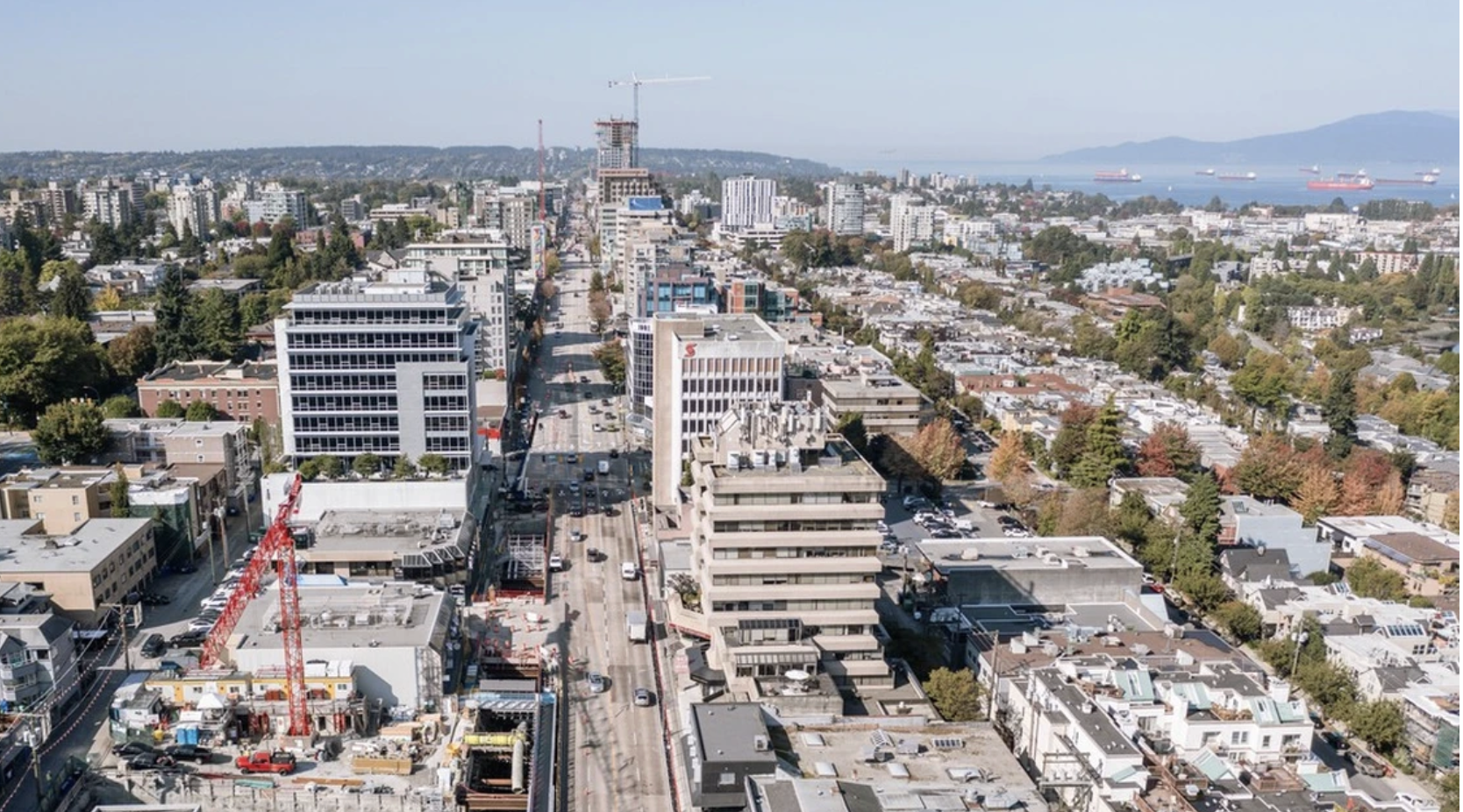
Oct 14, 2025: Standardized zoning for the Broadway and Cambie Plans
Vancouver City Council gave the nod to a new pre-zoning plan it believes will shave up to a year off development wait times. It does so by introducing standardized zoning changes throughout the Broadway and Cambie Plan areas.
The new scheme (see report above) passed unanimously, with an abstention from Cllr. Sean Orr (the City considers abstentions as a yes vote) and Councillors Rebecca Bligh and Mike Klassen absent.
According to Director of Planning Josh White, the new zoning brings a “sea change” to planning by eliminating the need for individual site rezonings, allowing developers to go directly to a permit application, and prohibiting, in most cases, the need for a public hearing.
The approved zoning will allow the following:
- R3: Low-rises between four and eight storeys
- R4: Mid-rises of approximately 12 storeys
- R5: High-rises around 20-22 storeys.
See the Province’s requirement for Transit Oriented Areas (TOA).
Council received hundreds of letters and more than 70 people spoke at the public hearing, with most opposing the plan. Jay Chadha, Director of Policy and Advocacy at the Urban Development Institute, said that although he liked the idea of speeding up development, incorporating affordable housing initiatives in the Plan will not be “economically viable.”
“Cost[s] have risen so much that buyers and tenants have hit a wall, and our members cannot provide housing at a cost that people can afford to buy or rent,” he said in the October 8, 2025 issue of the Vancouver Sun.
The plan drew criticism from many. In a letter to Council, Vancouver’s Coalition of Neighbourhoods (CVN) criticized the plan for repeating “the same mistakes.”
The group said the new program continues to favour more of the wrong kind of supply—small, expensive units in large towers. Vancouver’s housing crisis, it contends, was not fueled by a lack of housing, but by sky-high prices developers are charging. “The tower scale densities are economically tested to ensure they will be large enough to incentivize demolition of more affordable existing rental buildings.”
Colleen Hardwick of TEAM Vancouver criticized the plan for excluding public input. “The new plan virtually eliminates public hearings as well as requirements that residents be notified about developments – even towers – being built near them.” Hardwick added the plan ignores both the public good and the advice of 28 prominent urbanists who helped shape Vancouver into the livable city it is today. “It will forever damage neighbourhoods, and benefit only the development industry.”